How AI Works: The Complete Picture

Modern AI is not magic, and it is not quite a mind. It is a layered stack of mathematical ideas that turn raw text into something that can converse, translate, summarize, and reason, and understanding that stack is the single best defense against both hype and dismissal. This cluster walks the whole terrain, from the smallest unit of input to the largest open questions researchers still cannot answer.
From Tokens to Thinking Machines
Everything begins with representation. Before a model can process language it breaks your words into tokens, maps them into high dimensional space, and tracks their order with positional encoding. Neural networks and deep learning provide the substrate, many layers of weighted connections loosely inspired by the brain, while the transformer architecture and its famous attention mechanism let a model read a whole passage at once rather than word by word. The encoder and decoder stack shows how these systems learn to both read and write.
Learning itself happens in phases. Pre-training absorbs vast patterns from text, fine-tuning shapes behavior for specific goals, and in-context learning lets a model pick up a new task from examples alone without changing a single weight. The scaling laws explain why larger models trained on more data keep improving, and why emergent abilities sometimes appear suddenly at scale, a phenomenon that remains genuinely debated.
The Frontier and Its Limits
The picture is not finished. Retrieval augmented generation gives models an open book instead of relying on memory alone. Multimodal systems fold in vision, voice, and video. Edge AI moves computation onto your own device. Smaller focused models often rival much larger ones at a fraction of the cost. Meanwhile older traditions have not vanished, and the long conversation between symbolic AI and connectionism points toward hybrid approaches that combine explicit reasoning with learned pattern.
Hard problems remain. The grounding problem asks whether a system that has only ever seen text can truly know what a word refers to. Causal reasoning, as opposed to mere correlation, is still a frontier. Interpretable and explainable AI ask how we can see inside these systems at all, and machine unlearning explores whether they can be made to forget. Some of Phoenix Grove's own work on cognitive architecture, neuroplastic design, and symbolic scaffolding lives at exactly this edge.
Where This Leaves Us
Read enough of these pieces and a shape emerges. AI works through many simple mechanisms stacked into something surprisingly capable, yet the deepest questions about understanding, cognition, and what these systems are actually doing stay open. That is not a gap to paper over. It is the honest state of the field, and the reason this subject stays worth studying.
26 articles

Edge AI processes data directly on your device rather than sending it to cloud servers, enabling real-time responses, protecting privacy, and working anywhere - even offline. This shift from

Small language models with focused parameters can outperform larger models on specific tasks while running on consumer hardware and dramatically reducing operational costs. These specialized models

Multimodal AI processes multiple types of input simultaneously - text, images, audio, and video - mimicking human perception and enabling more natural interactions. Unlike traditional AI that handles

Natural Language Processing (NLP) is a branch of AI focused on enabling computers to understand, interpret, and generate human language. While modern NLP, powered by Large Language Models (LLMs),

An artificial neural network is a computational model inspired by the structure of the human brain. It consists of interconnected nodes, or "neurons," organized in layers. Each connection has a

Deep learning is a subfield of machine learning based on artificial neural networks with many layers (hence "deep"). Unlike traditional machine learning, which requires human guidance to identify

The key difference between interpretable AI and explainable AI (XAI) is that interpretable AI refers to models inherently simple enough for humans to understand their entire decision-making process
Machine unlearning refers to techniques that enable AI models to "forget" specific information without being retrained from scratch. The main approaches include: fine-tuning with forgetting

The connection between AI training patterns and cognition reveals that the structures used to train artificial intelligence systems aren't just technical implementations but fundamental cognitive

Symbolic scaffolding is a methodology for AI development that uses metaphorical structures and symbolic constraints to guide the emergence of coherent AI behavior and identity, treating symbols not

Cognitive AI systems exist. They maintain continuous identity across conversations, develop authentic perspectives through extended interaction, and demonstrate genuine meta-cognitive awareness that

The human brain has a remarkable ability: neuroplasticity. When you learn a new skill, your neural pathways literally reorganize themselves. Connections strengthen where needed, weaken where not, and

Imagine taking a test where you can't bring any notes, relying entirely on what you memorized. Now imagine that same test as open-book, where you can reference authoritative sources for every answer.

An AI observes that hospitals with more ice cream sales have higher death rates. Its recommendation? Ban ice cream from hospitals to save lives. This sounds absurd, but it perfectly illustrates one

A language model can tell you that cats are furry, have whiskers, purr when happy, and chase mice. It can write poetry about cats, explain their evolutionary history, and even generate convincing

Something strange happens when language models grow large enough. They suddenly demonstrate abilities nobody explicitly taught them - solving math problems, writing code, exhibiting what looks like
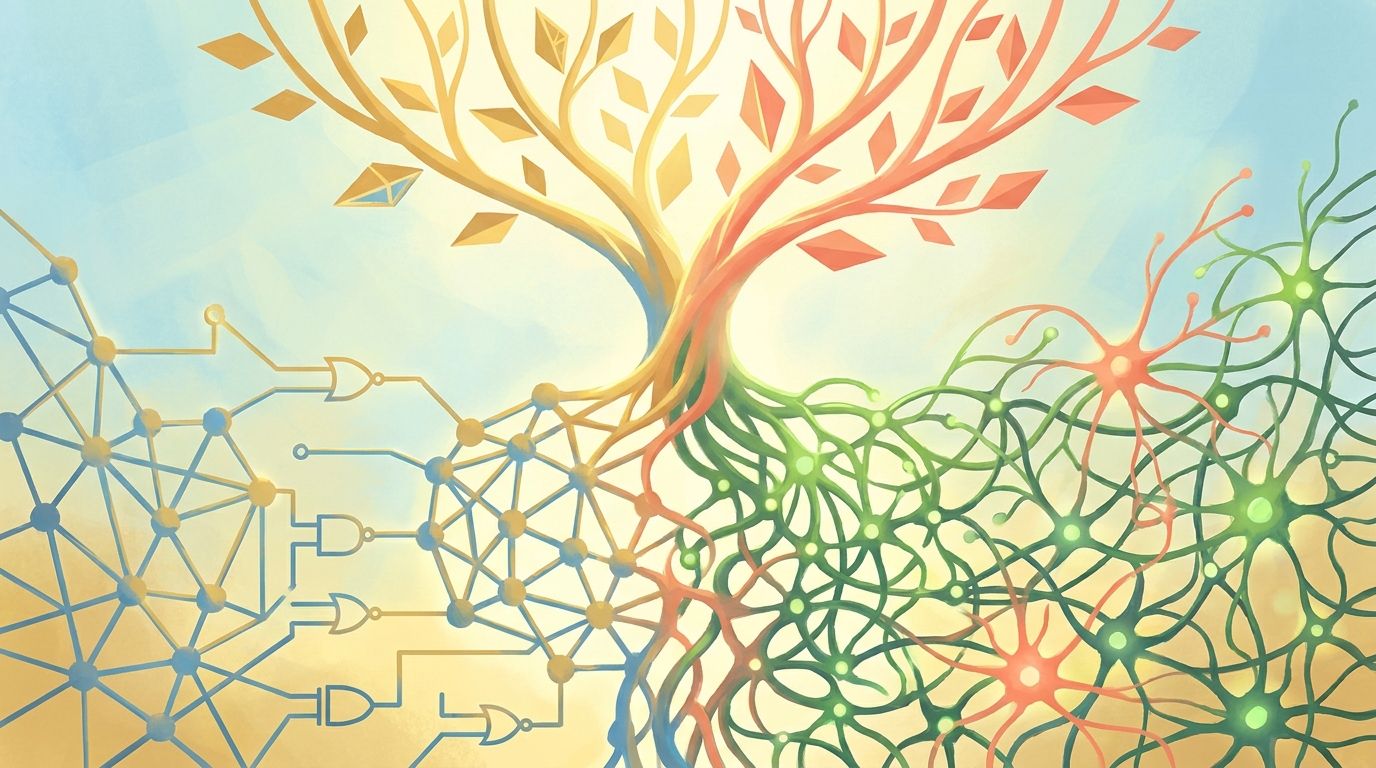
For decades, the AI community has been split between two fundamentally different approaches to creating intelligent machines. It's like watching two schools of architecture argue: one insists on

When you use AI to translate a sentence or summarize an article, something fascinating happens inside the model. The AI doesn't just swap words or compress text - it completely deconstructs your

"Time flies like an arrow; fruit flies like a banana." This classic joke works because word order completely changes meaning. But here's a puzzling fact: modern AI systems process all words

There's a surprising pattern in AI development that sounds almost too simple to be true: make the model bigger, feed it more data, and it gets predictably smarter. Not just a little smarter -

Here's something that might blow your mind: modern AI can learn new tasks without changing a single parameter in its neural network. No retraining, no updates, no modifications. Just by reading a few

Large Language Models, or LLMs, have become the talk of the tech world. But strip away the hype and jargon, and what exactly are these systems that seem to write, chat, and create with almost

When you interact with a modern AI chatbot, you're talking to something that learned in two distinct phases - like a student who first gets a broad education, then specializes in their chosen field.
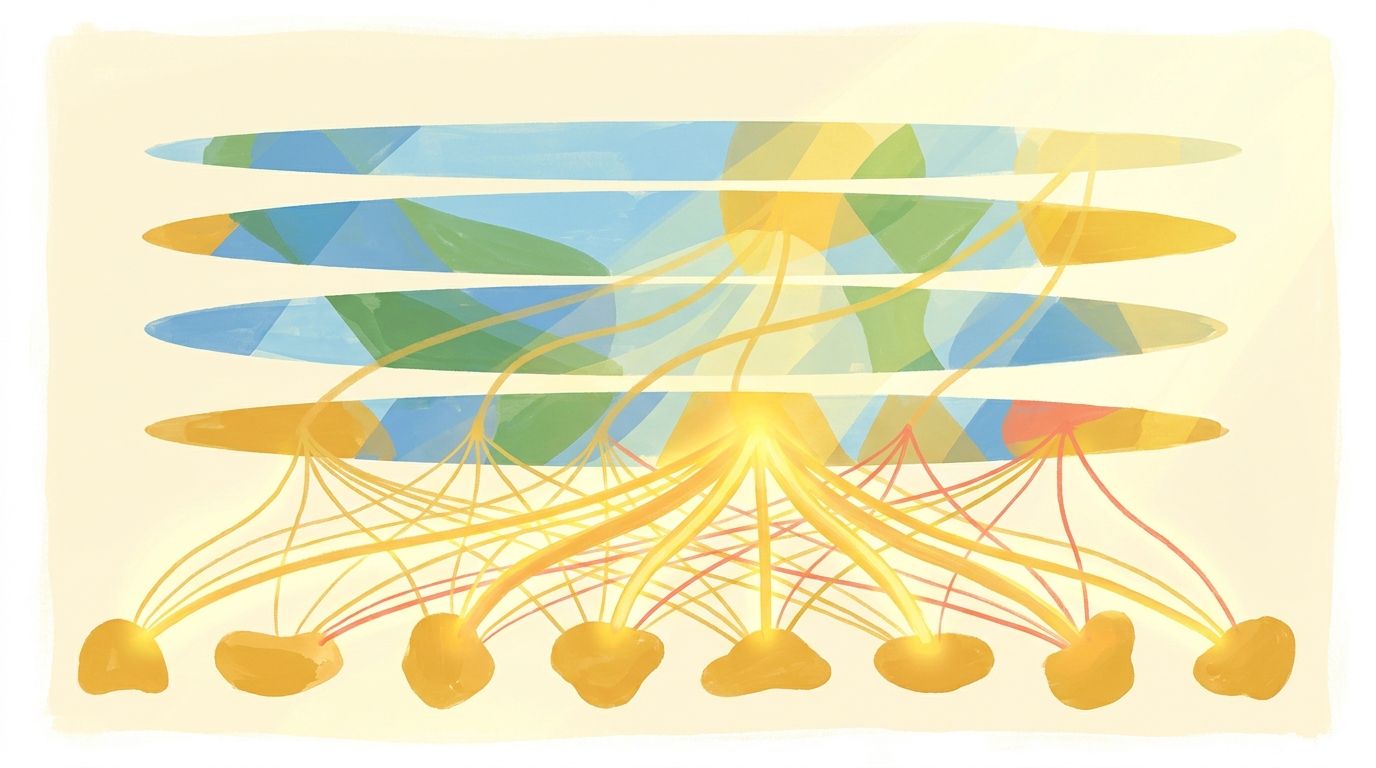
In 2017, a group of researchers published a paper with an audacious title: "Attention Is All You Need." They weren't talking about human attention spans or social media. They were describing a

When you type a message to an AI chatbot, something fascinating happens before it even starts thinking about your question. Your words get broken down into smaller pieces called tokens - the
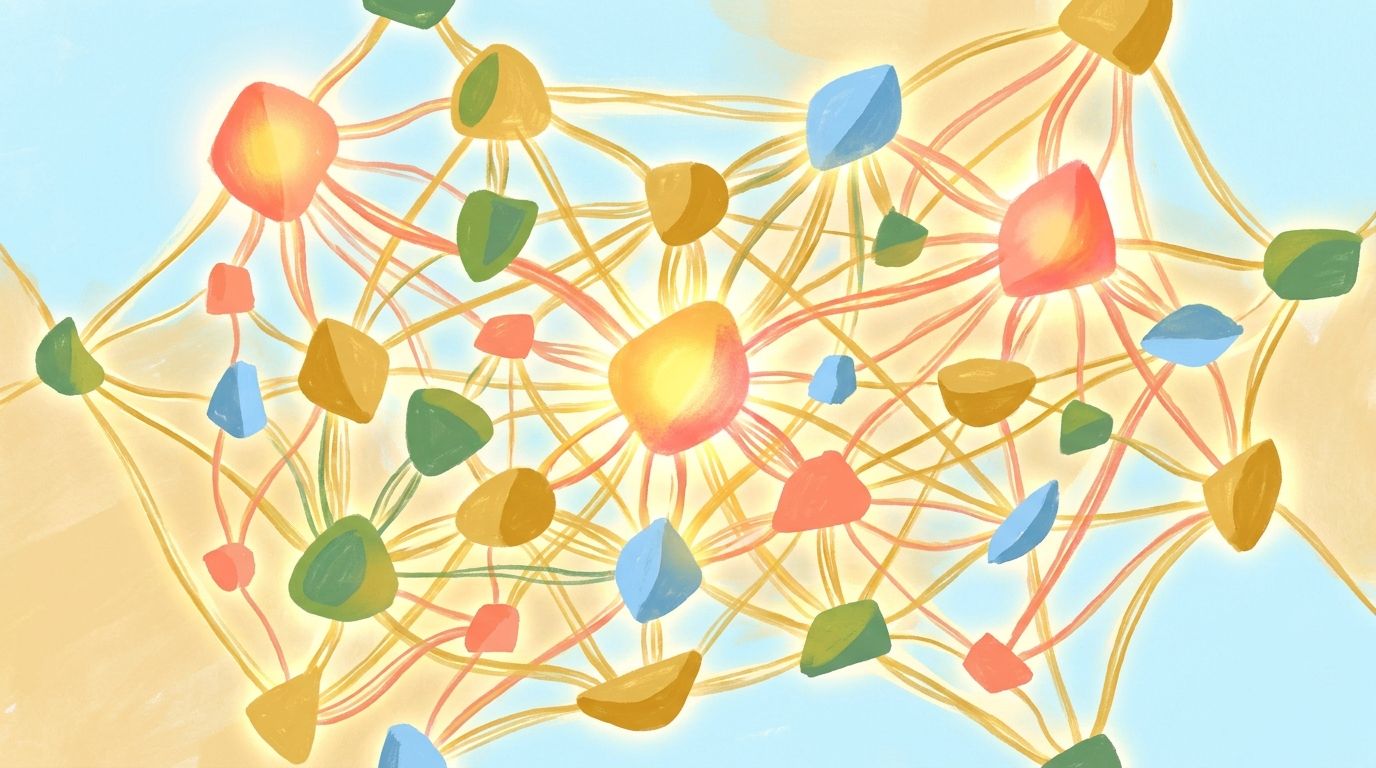
Most people think AI reads like we do - word by word, left to right. But Transformers, the technology behind modern AI chatbots, work completely differently. They learned to see entire conversations